When incidents occur within an organization that either impact, or threaten to impact the business, organizations must react quickly and effectively to minimize adverse affects and ensure compliance with internal and external mandates.

Incident management is a critical process that provides an organization with the ability to detect and record incidents and then direct the appropriate resources to resolve them as quickly as possible. The process also provides upper management with accurate information on incidents impacting the organization so they can manage resource requirements and plan for their provision.

The typical Incident Management process requires many elements, including: completing an incident report, reviewing and validating the data provided, investigation by a senior team, reviewed by management and escalation when required. Incidents often require decision points as to how similar incidents will be prevented in the future, or if the organization is willing to accept the potential risks associated without taking further actions.

During the average process, many people get involved and numerous types of data or evidence need to be gathered. All this information needs to be recorded, along with appropriate sign-off by authorized individuals. As the workload and need for integrity in Incident Management grows, organizations quickly find that manual paper-based approaches and home-gown solutions built to capture the initial incident data can not be scaled to provide the efficiency needed to respond in a timely, manner.

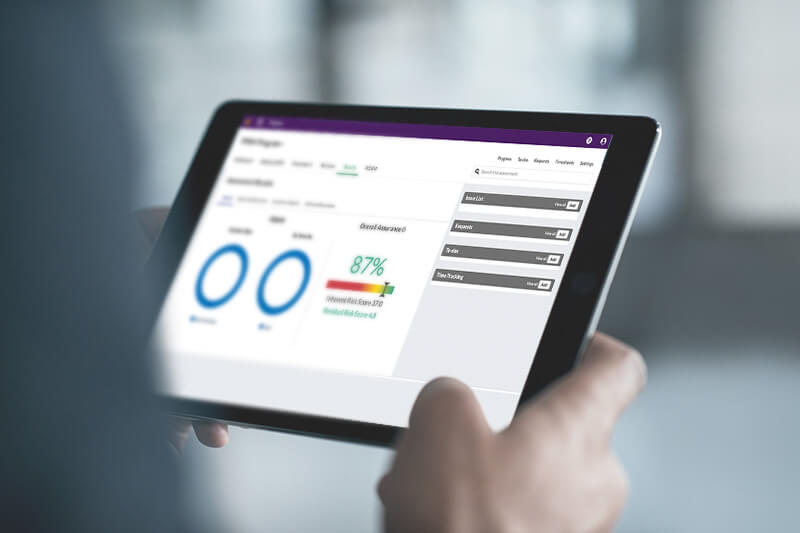
In Rsam, Incident forms can be quickly created using simple administrative GUIs. These form(s) can be easily accessed and filled in by the requestor / end user. End users can report incidents of any type (technology, physical, administrative etc.) and also note the individuals involved, areas affected, related evidence data and file attachments. Such forms can be automatically routed to the appropriate individuals involved in the incident management process, gaining the appropriate sign-offs and keeping an audit trail of all activity. A company's incident management process can be easily replicated within Rsam literally in a matter of minutes. The Incident management process using Rsam provides a consistent structure by which incidents can be recorded, inventoried, investigated, diagnosed, resolved, and finally closed. The process ensures that each incident is owned, tracked, and monitored throughout its life cycle. Built-in dashboards and reports help track and manage incidents. Email notifications can be used to not only notify users when to engage in the process, but also to send reminders to users when appropriate milestones are reached. Rsam reports can also show useful trends such as which areas are repeatedly targets of incidents of a similar nature, implying that additional safeguards or procedures should be in place or added to these areas.